

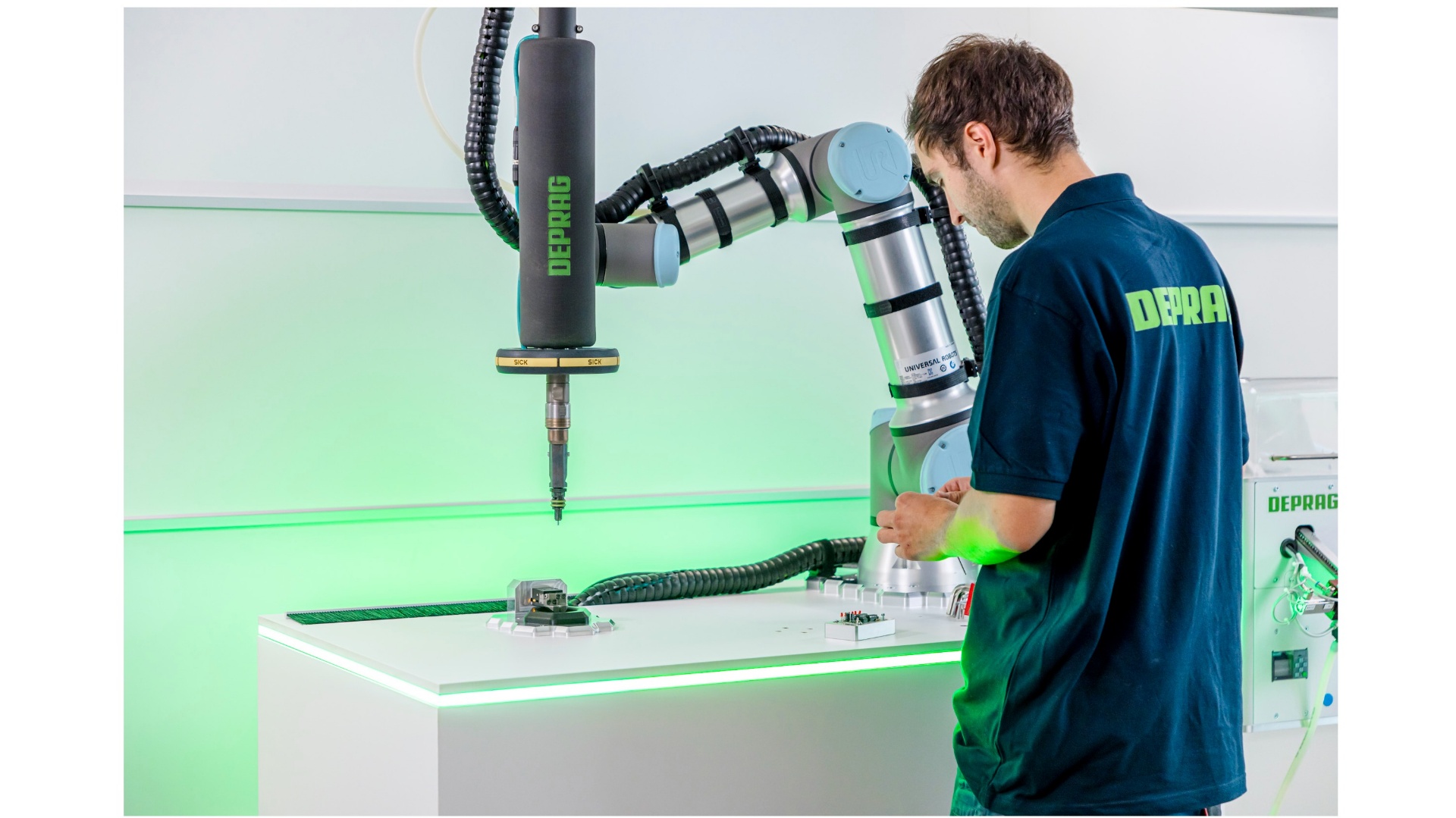
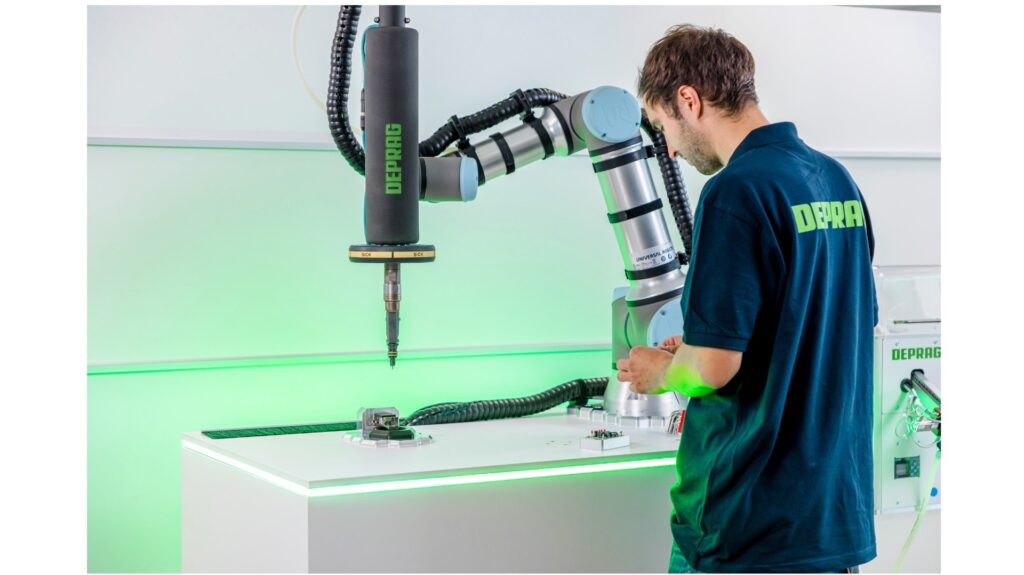
While Industry 4.0 focused on connectivity, data, and automation, Industry 5.0 puts people back at the center of industrial production. The goal of modern assembly solutions is to create intelligent cooperation between humans and machines – not in competition, but as a synergy. Human-Robot Collaboration (HRC) plays a key role in this transformation.
In HRC applications, collaborative robots – so-called cobots – work directly with human operators without the need for safety fencing. This opens up new possibilities, especially in areas like manual screw assembly, where flexibility, precision and ergonomics are critical.
Why HRC screwdriving is gaining importance
In many manufacturing environments, screw assembly remains a challenge: Repetitive, ergonomically demanding and time-consuming. Despite automation progress, some tasks are still best done with human intuition and adaptability. But what if you could combine human dexterity with robotic precision?
This is exactly where HRC screwdriving systems come in. They support employees by:
– Performing repetitive, physically demanding screwdriving tasks
– Ensuring consistent quality through controlled torque and angle monitoring
– Allowing flexible integration into existing workflows and workstations
– Working safely side-by-side with operators – certified for collaborative use
– Instead of replacing workers, cobots take over non-value-adding or ergonomically critical steps and create capacity for higher-value tasks.
Key features of our HRC system:
– Compact and modular design – ideal for flexible assembly cells
– Certified safety concept for fence-free use with cobots
– Fully integrated screwdriving and feeding technology
– Seamless documentation and process monitoring (e.g. torque, angle, OK/NOK evaluation)
This allows companies to automate manual screwdriving tasks step by step, without compromising flexibility or safety.